Environmental Impact Dairy Cows Vs Beef Cows
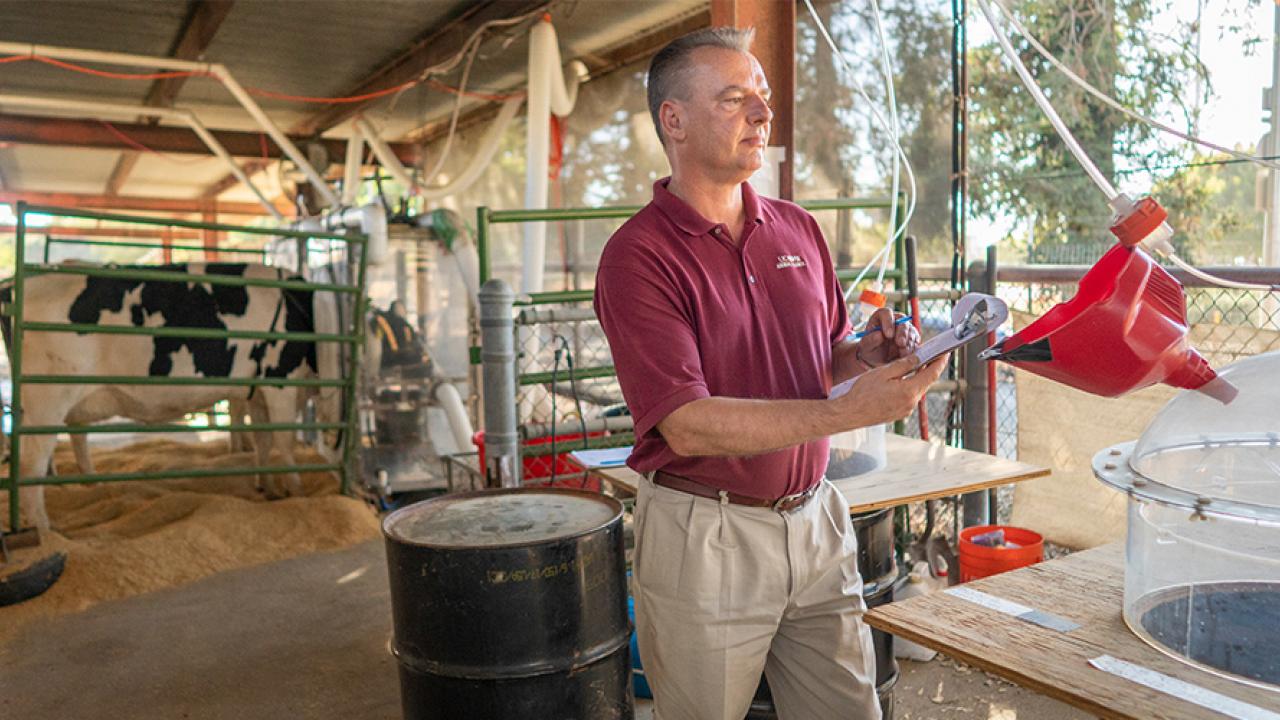
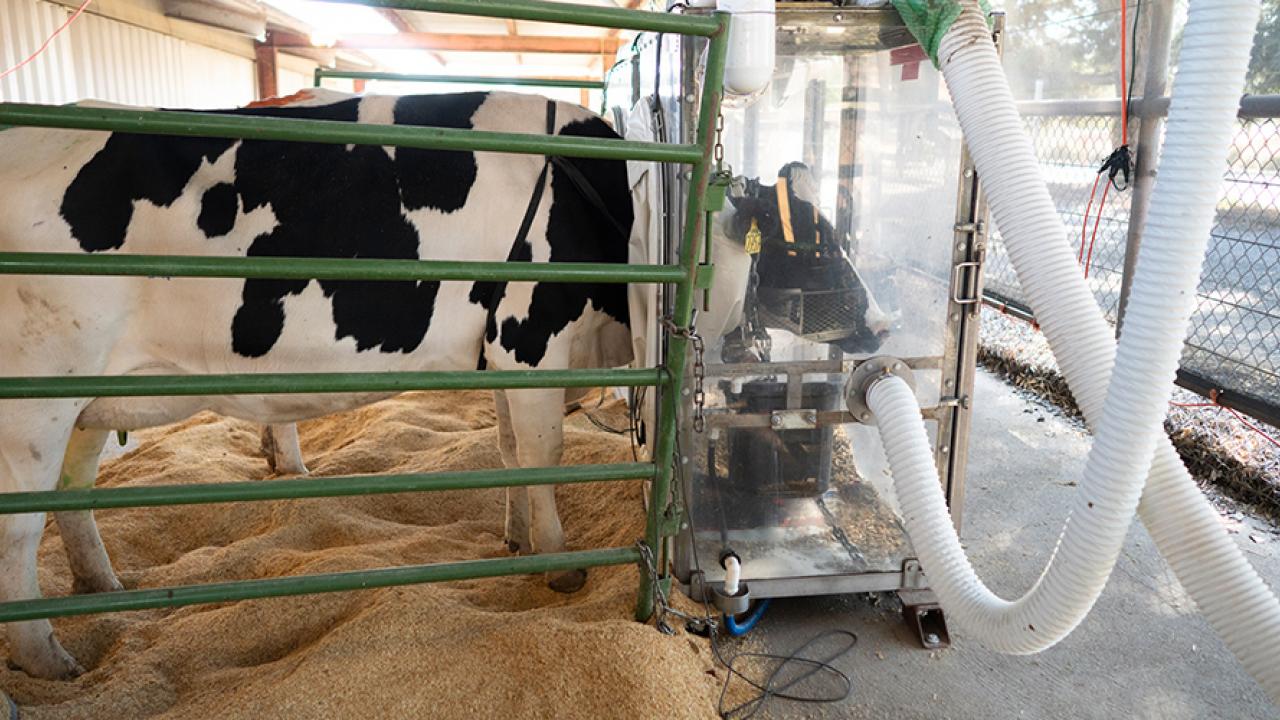
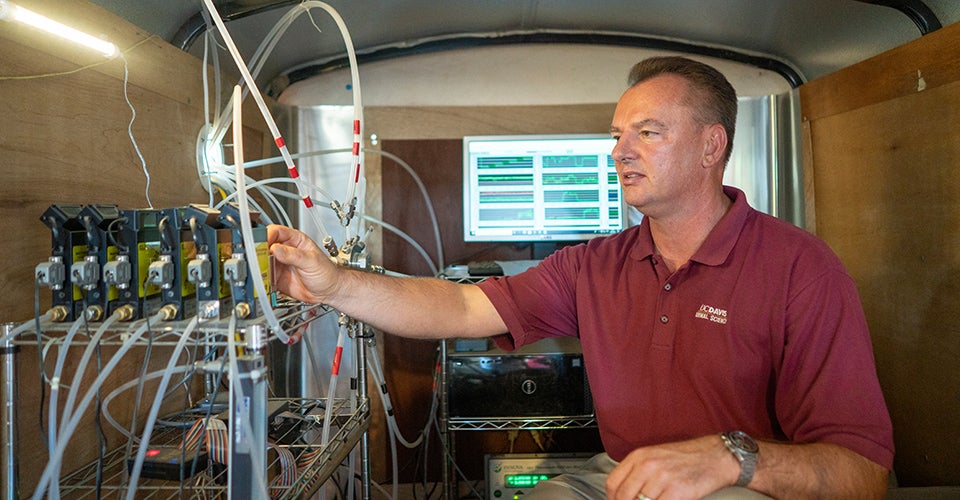
Within the University of California, Davis, a Holstein cow has its caput and cervix sealed airtight inside a large, clear-plastic chamber that resembles an incubator for newborns. While giant tubes above the chamber pump air in and push air out, the cow calmly stands and eats her feed. Equipment inside a nearby trailer spits out data.
This is how Frank Mitloehner measures gases that come from cows' stomachs and ultimately contribute to global warming. Quantifying these emissions is key to mitigating them, and Mitloehner is one of several UC Davis researchers investigating economical ways to brand livestock product more environmentally sustainable effectually the globe.
READ MORE:Unfold, the official UC Davis podcast, examines the bad rap cattle receive equally an unfriendly producer of climate-changing greenhouse gas.
Cattle are the No. one agricultural source of greenhouse gases worldwide. Each year, a single cow will belch about 220 pounds of methane. Methane from cattle is shorter lived than carbon dioxide but 28 times more potent in warming the atmosphere, said Mitloehner, a professor and air quality specialist in the Department of Animal Scientific discipline.
With the escalating effects of climate change, that fact has advocates urging the public to eat less beefiness. They contend it'due south an unsustainable nutrition in a world with a population expected to reach almost x billion past 2050.
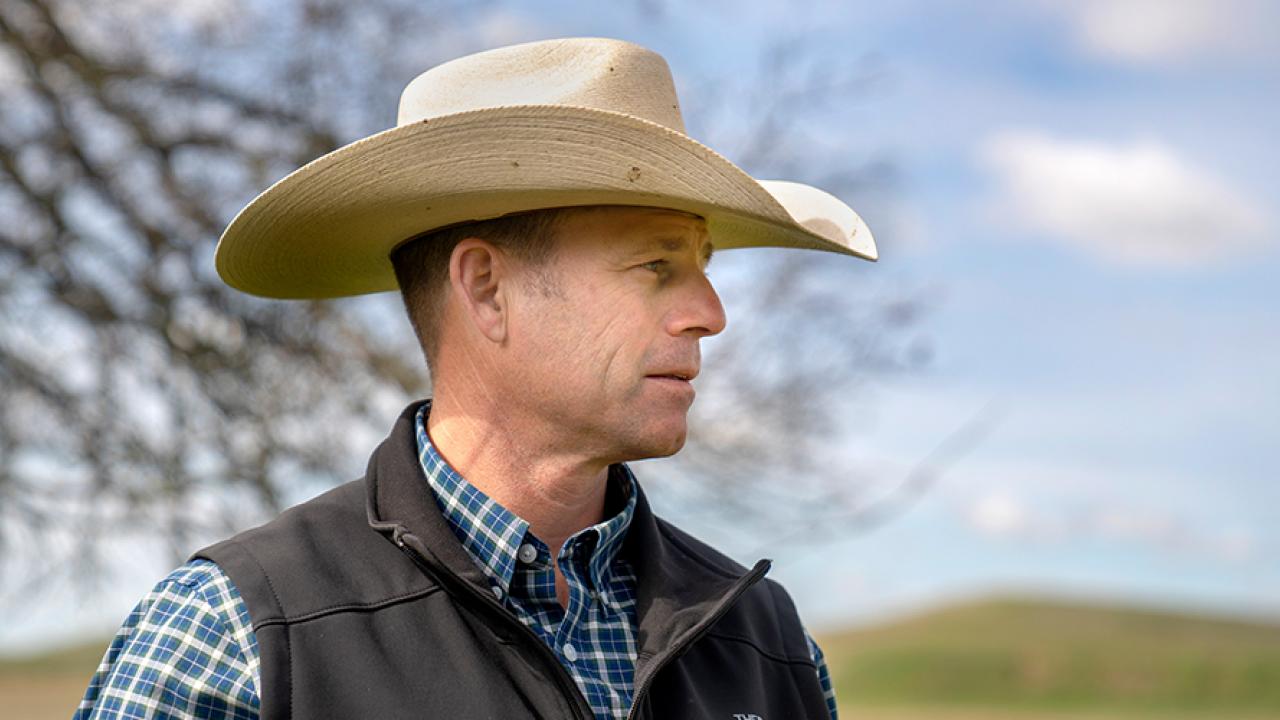
Mitloehner has openly challenged this view, writing in a contempo commentary for The Conversationthat "forgoing meat is not the ecology panacea many would take u.s.a. believe."
Cows and other ruminants account for simply 4 per centum of all greenhouse gases produced in the Us, he said, and beef cattle just 2 percent of direct emissions.
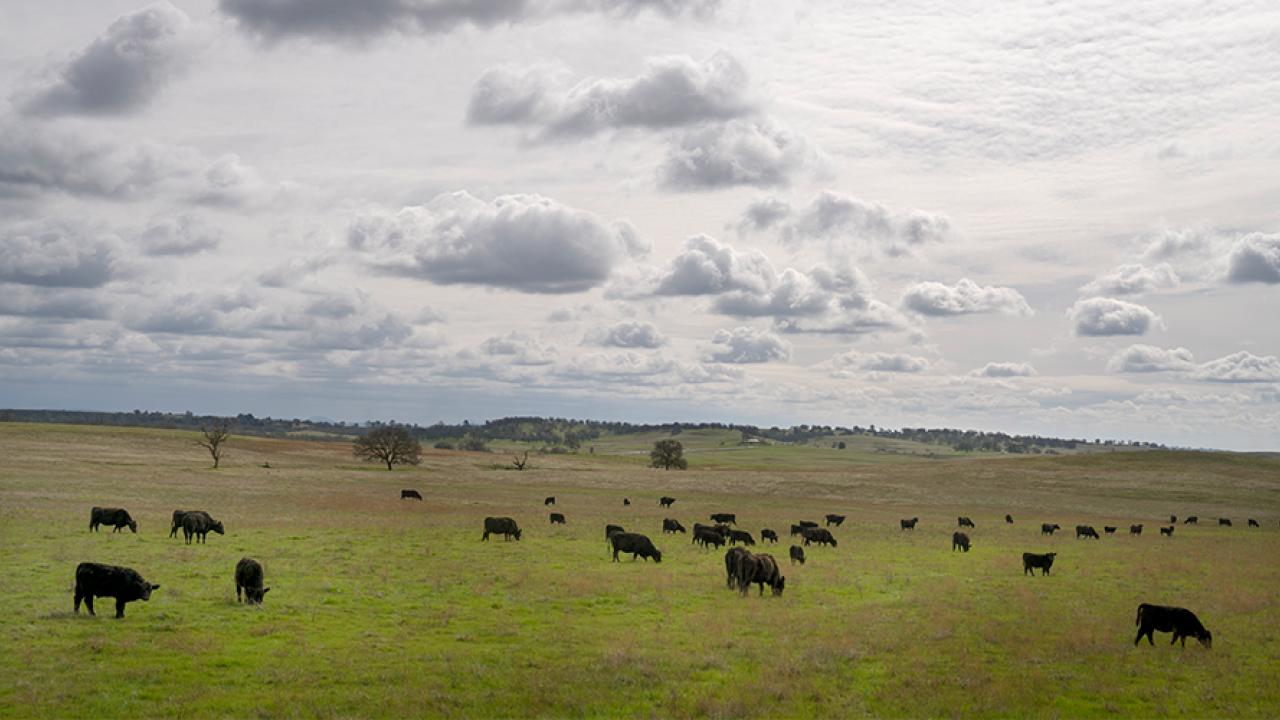
Better breeding, genetics and nutrition have increased the efficiency of livestock production in the U.S. In the 1970s, 140 meg caput of cattle were needed to meet need. Now, just xc one thousand thousand head are required. At the same time, those xc meg cattle are producing more meat.
"We're now feeding more people with fewer cattle," Mitloehner said.
The global problem
Shrinking livestock's carbon hoofprint worldwide is a big challenge. Livestock are responsible for 14.5 pct of global greenhouse gases.
India, for case, has the globe's largest cattle population, but the lowest beef consumption of whatsoever country. As a result, cows alive longer and emit more than methane over their lifetime. In improver, cows in tropical regions produce less milk and meat, and so it takes them longer to get to market.
"If you lot take hundreds of millions of cattle to achieve a dismal corporeality of product, then that comes with a loftier environmental footprint," Mitloehner said.
Researchers at UC Davis have projects in Vietnam, Ethiopia and Burkina Faso to heave livestock productivity through better nutrition. That may be critical going forward equally need for meat is ascent in developing countries.
"We look by 2050 there is going to exist a 300 percent increase in beef need in Asia," said Ermias Kebreab, a professor of creature science and manager of the UC Davis World Nutrient Center.
A new diet
Kebreab, Mitloehner and other UC Davis scientists are looking for ways to brand cows more sustainable and less gassy. One way to do that is to make their loftier-fiber diet easier to digest, and so scientists oftentimes plow to feed supplements for this purpose. It sounds simple, only finding an affordable and nutritious additive has proved hard.
However, Kebreab has succeeded in finding such a supplement by feeding dairy cattle a constitute mode off the trough menu: seaweed.
"We've done one trial and showed that there is up to a sixty pct reduction in marsh gas emissionsby using 1 percent of seaweed in the diet," Kebreab said. "This is a very surprising and promising development."
In addition to reducing methane output, the seaweed doesn't make the cows' milk sense of taste bad. He's now testing the nutrition on beefiness cattle. It could be a relatively inexpensive solution for reducing emissions.
This type of red seaweed, calledAsparagopsis taxiformis, has i large drawback: a wild harvest is unlikely to provide enough of a supply for wide adoption. Other scientists are looking for ways to grow it to scale, and Kebreab remains hopeful that feed additives agree the well-nigh promise.
"I believe that nosotros will have a solution, two or three good candidates, that would reduce emissions quite substantially," Kebreab said. "I tin see that happening in the next few years."
Cows equally part of the climate change solution
Also emitting greenhouse gases, another common criticism of beef production is that cows have up nearly half the land in the United states. Overgrazing those lands can degrade soil health and biodiversity. Still researchers debate that, managed correctly, cows help restore good for you soils, conserve sensitive species and enhance overall ecological part. Proper cattle grazing management can fifty-fifty help mitigate climate alter.
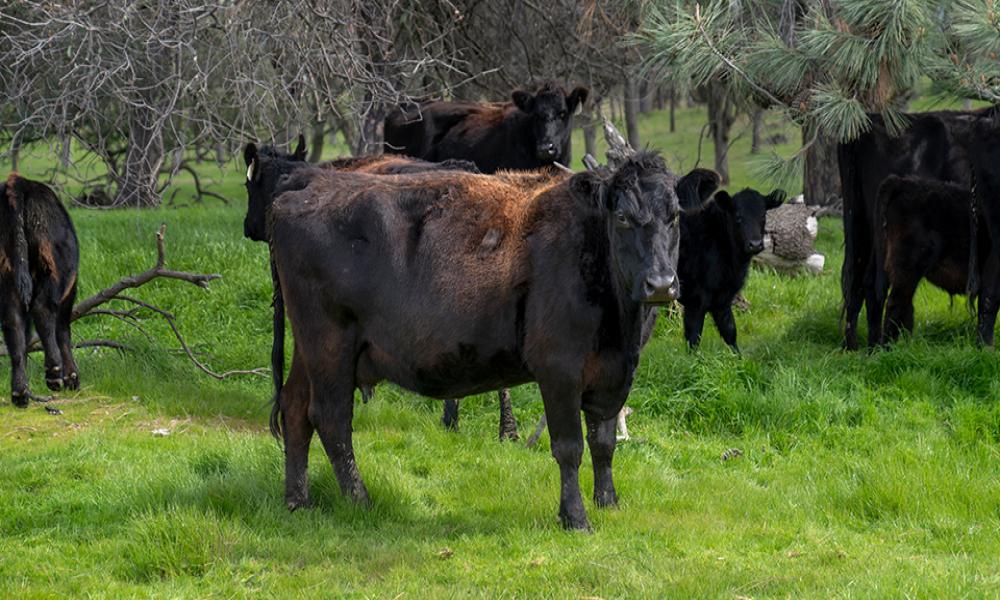
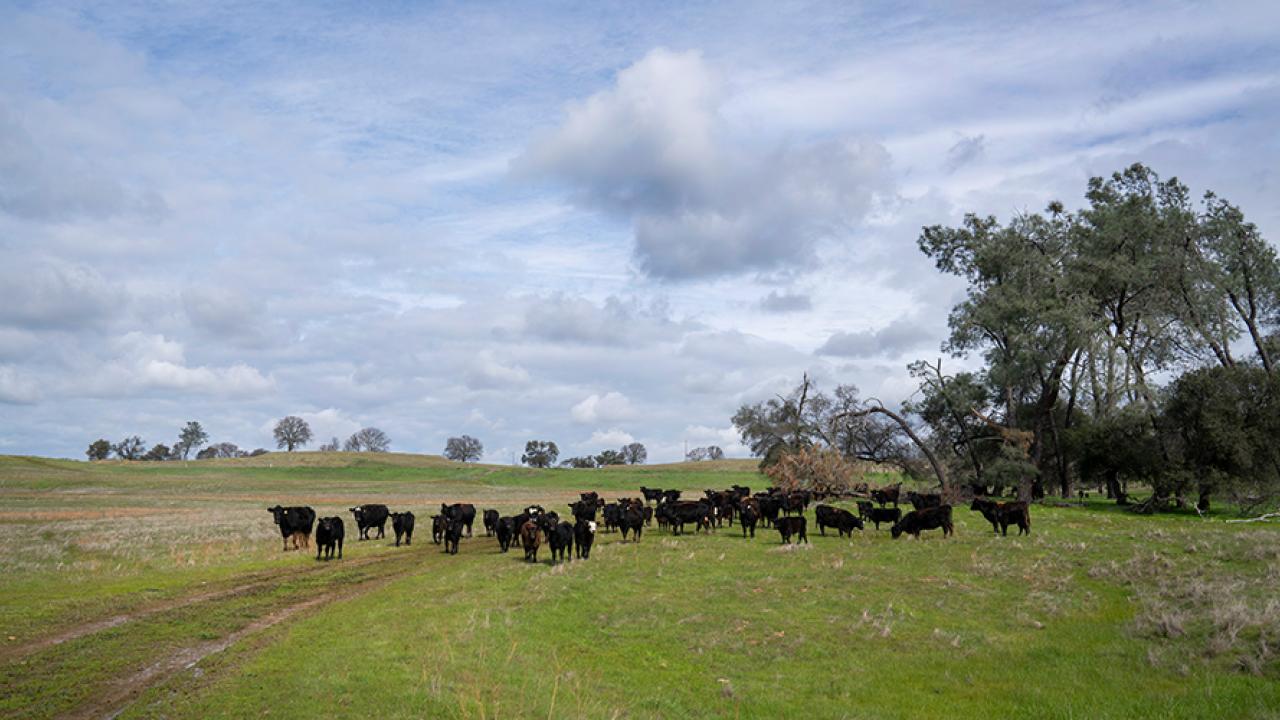
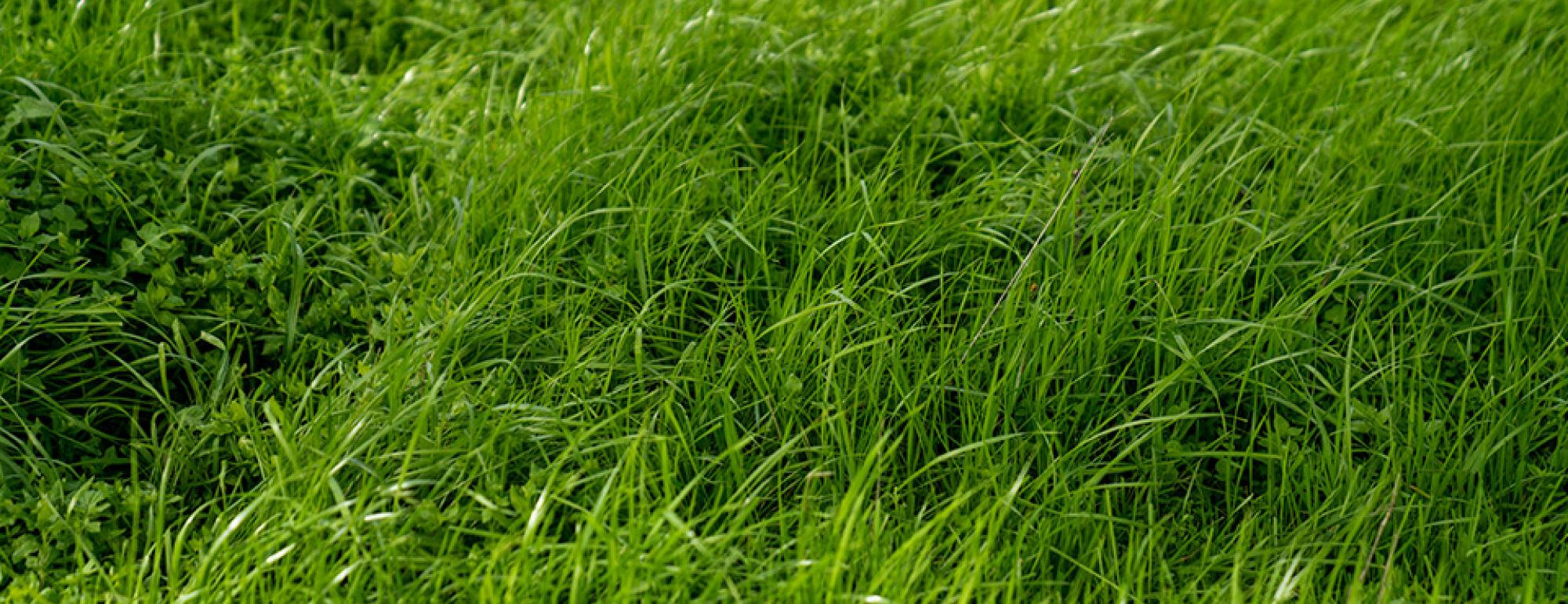
On the Van Vleck Ranch east of Sacramento almost Rancho Murieta, Jerry Spencer manages about two,500 cattle. A good winter'south pelting this year has left them a feast of green pastures. Spencer pays shut attending to the grasses, making sure the animals have plenty to eat simply don't overgraze. He maintains a variety of native grasses to keep the cows healthy and rotates herds betwixt pastures to give the plants a rest from grazing and opportunity to recover.
"You want to leave every bit much as grass every bit possible to allow water infiltration and healthy root systems," Spencer said.
(Research at UC Davis indicates just a bear on of the ocean algae in cattle feed could dramatically cut greenhouse gas emissions from California's 1.8 million dairy cows.)
Maintaining healthy root systems isn't just good for the plants. The longer and denser the roots, the more they can hold atmospheric carbon in the soil.
"I of the best and nearly unproblematic things we can do on rangelands to help mitigate climate change is to conserve rangeland ecosystems and go on the carbon that's already stored in rangeland soils safely stored at that place," said Ken Tate, a UC Davis rangeland watershed direction extension specialist. California is at detail risk of rangelands being converted to housing and other developments, he said.
Ranchers actually have piffling financial incentive to let their herds overgraze or let their herd's hooves meaty and dethrone soils. Spencer said if the land degrades, and then the cattle's health can suffer besides.
"Sustainability is keeping everything viable both economically and biologically," said Spencer. "Ranchers don't continue to exist if either one of those are really out of residue."
While sustainable grazing practices won't eliminate methane produced by the cows, they tin can beginning it. According to Projection Drawdown, this solution could sequester 16 gigatons of carbon dioxide by 2050.
"Proper grazing sustains working landscapes that support communities, food production and a healthy environment," Tate said.
Meat-free movement
Environmental considerations may factor into people's nutrient choices, merely those decisions are too based on religious and cultural behavior and traditions, every bit well as personal tastes. In low-income countries, there may not exist any option. It's why Tate and Mitloehner believe the meat-gratis movement can get only and then far.
"There will never be a situation where some major role of our diet volition be ruled out," Mitloehner said. "My job is not to judge people for their eating habits. My task is to look at how nosotros can produce livestock and minimize those environmental impacts that do exist."
Media contact: Amy Quinton, UC Davis News and Media Relations, 530-752-9843, amquinton@ucdavis.edu
Related Stories

The Many Flavors of Cacao
UC Davis students and experts are working to meliorate understand cacao, a vital ingredient necessary not but to chocolate production, but to many people beyond the world.
Can We Abound One of the World'southward Largest Nutrient Crops Without Fertilizer?
A multidisciplinary team of researchers from UC Davis have discovered a variety of corn that can prepare nitrogen from the temper, instead of requiring constructed fertilizers.
Protecting Small Farms in Mozambique From Drought
A team of agricultural scientists is testing whether insured seeds tin improve food security for farmers who take a chance losing crops to extreme atmospheric condition.
Source: https://www.ucdavis.edu/food/news/making-cattle-more-sustainable
0 Response to "Environmental Impact Dairy Cows Vs Beef Cows"
Postar um comentário